The past does not rest in peace. It has a funny way of coming alive to haunt us, reanimated like the living dead by the contemporary issues that plague us.
However, its safe distance from the present can lull us into a false sense of security and make us believe that complex issues are much simpler than they first appear.
When history is told as a ghost story, fun and frivolity often overtake serious contemplation and respect for the dead who were dishonored in life. Drawing in new audiences through the popular methods of dark tourism is a tricky business that walks a thin line between education and entertainment, truth and exaggeration, lightheartedness and insensitivity.
In Tales From the Haunted South: Dark Tourism and Memories of Slavery From the Civil War Era, historian Tiya Miles is our tour guide through the dark tourism industry’s growing intersection with traditional heritage tourism and public history at large. In her trek across some of the South’s most “haunted” historic homes and plantations, the real specter she found was the widespread commercialization of the historical pain and trauma of Black men and women (in an eerie parallel to antebellum enslavement, black bodies again furthered white profit).
Ghost tours entice audiences because they seem to tear through the veil separating the past and the present. In Miles’s words: “Ghosts represent history in a way that feels like magic” (125). Attendees are promised the opportunity to experience the past in an incredibly personal way – seeing a ghost is seeing “living” proof of the lives that came before our own.
In the right hands, a ghost tour could be an incredible tool for making history come to life, especially the stories that still haunt us today. However, many tour companies are much more interested in making money than in educating the public. So, where public historians see a “ghost stories” as a chance to confront contemporary social issues and change attitudes, ghost tour companies see a chance to titillate and sell another Hurricane or Voodoo doll.
Miles had me in her sway throughout the book with her insightful analysis of something many historians often brush off to the side and dismiss as harmless without thought. She thoroughly convinced me that ghost tours can (often unintentionally) be more sinister than just telling a scary story.
Focusing in on the horrors enacted on Black bodies divorced from crucial contextualization that holds the perpetuators accountable serves only to uphold the outdated mores of the antebellum era, harmful racial stereotypes, and sanitized narratives that absolve modern people from undertaking the difficult work that needs to be done toward restitution and reconciliation.
Chapter 2, set at Madame Delphine Lalaurie’s New Orleans mansion, spoke to me most because a year and a half ago, I was one of those drunk tourists on a “Vampires and Ghosts” tour in the Big Easy, Hurricane in hand. With vampires in the mix, I didn’t expect to learn much history. I was lucky to have a tour guide that acknowledged historical inaccuracies, telling us the urban legend before he divulged what actually happened.
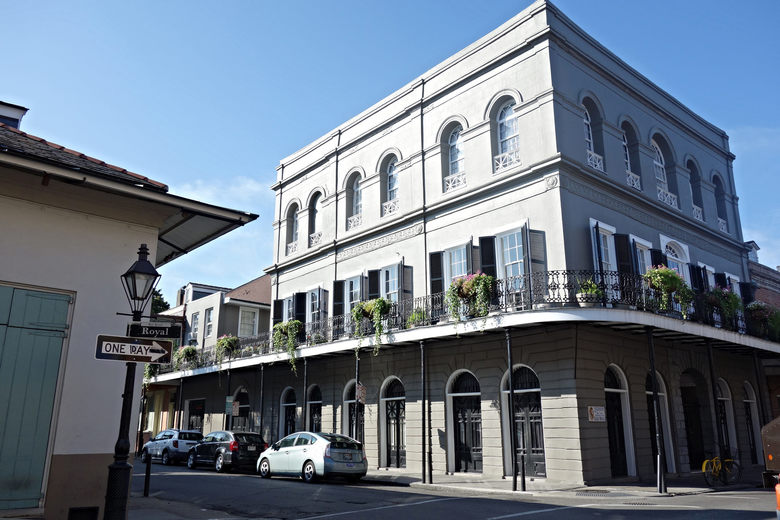
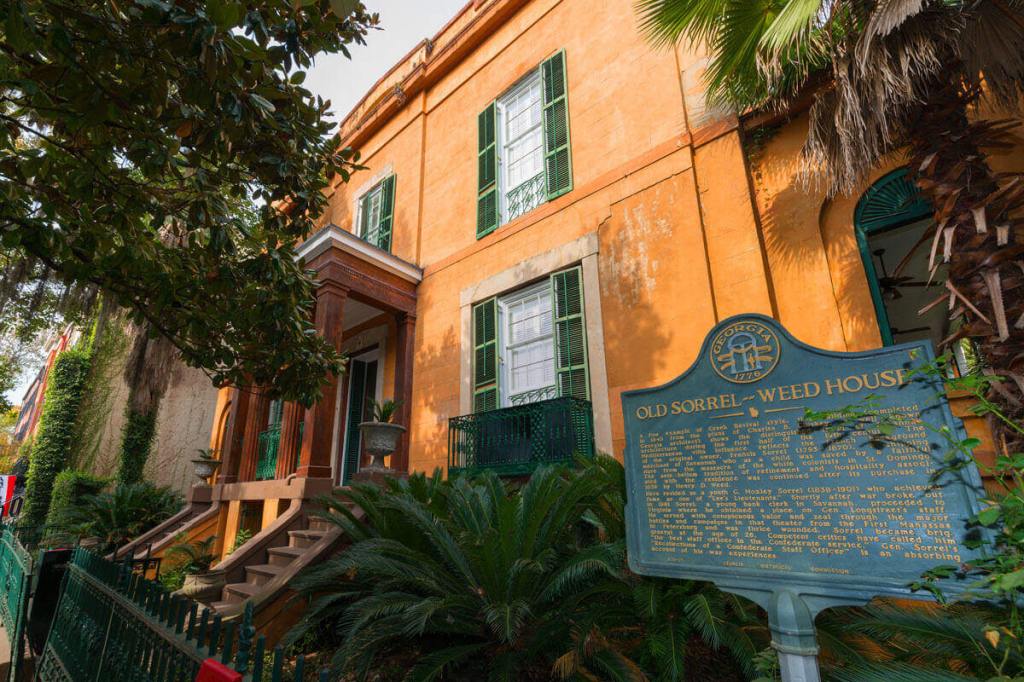
One of our stops was Madame Lalaurie’s house of horrors. I don’t recall my tour guide making any claims that New Orleans was kinder to enslaved men and women than other cities. To be completely frank, I was a few drinks in, making me less able to hang on his every word. However, his recounting of Lalaurie’s tortures painted them as extreme. Miles’s breakdown of the mythologized Lalaurie story opened my eyes to efforts to deflect blame away from white men and society as a whole. Delphine Lalaurie is painted as an abomination that did not fit in with greater New Orleans society – a Creole woman in a newly American town marked by unladylike habits, sexual deviance, and a rumored connection to (exoticized, demonized) Voduo. By highlighting this one story of the abuse of enslaved people (out of thousands of others), the city of New Orleans tries to wash its hands of the harsh realities of slavery. Depicting Francis Sorrel as a secret Black man similarly tries to divorce white Americans from the many crimes of the era.
Ghost tours aren’t going away. The industry is booming and is sure to cross the line deeper and deeper into heritage tourism territory. This shows that there is a demand – people are interested in learning about history in different ways. It’s up to us to find respectful ways to take up this call and add back in complexity and nuance.
Miles ends her book with this exhortation: “Let our ghosts be real, let our ghosts be true, let our ghosts carry on the integrity of our ancestors” (132).
 MUSEUM MUSINGS
I quite agree. We know these ghost tours aren’t going away, so public historians should use them as a tool. We have got to educate the public while also finding a balance where we can be respectful and have less of the sensationalized narratives. Because the public is eager for ghost stories we can try and use them to help audiences confront contemporary social issues through facts while also acknowledging the urban legends. If it is just about the thrill of possibly seeing a ghost, we become a bit insensitive to the terrible struggles that slaves and others faced.
LikeLike
A figure like Madame Lalaurie unfortunately can draw lots of attention from people who are vaguely interested in history. Miles is engaging in important work when she emphasizes the context that the Lalaurie story emerged out of, namely one where cruelty to enslaved people was occasionally condemned, but slave ownership was not. Visitors who only pay attention to the horror stories are missing the forest for the tallest trees.
LikeLiked by 1 person
yes, jim. i think it’s incredibly savvy to use a figure that provokes interest to draw the visitor into more challenging historical narratives and contexts.
LikeLike